

Mental health has become one of the most pressing concerns in today’s fast-paced world. Among various conditions, depression silently affects millions of people, often going unnoticed or untreated. While modern medicine offers effective treatments, many individuals are now turning toward holistic healing methods. One such powerful Ayurvedic therapy is Shirodhara for depression.
In this article, we will explore everything you need to know about Shirodhara for depression, including its definition, types, causes of depression, Ayurvedic and modern approaches, benefits, limitations, and much more.
What is Shirodhara?
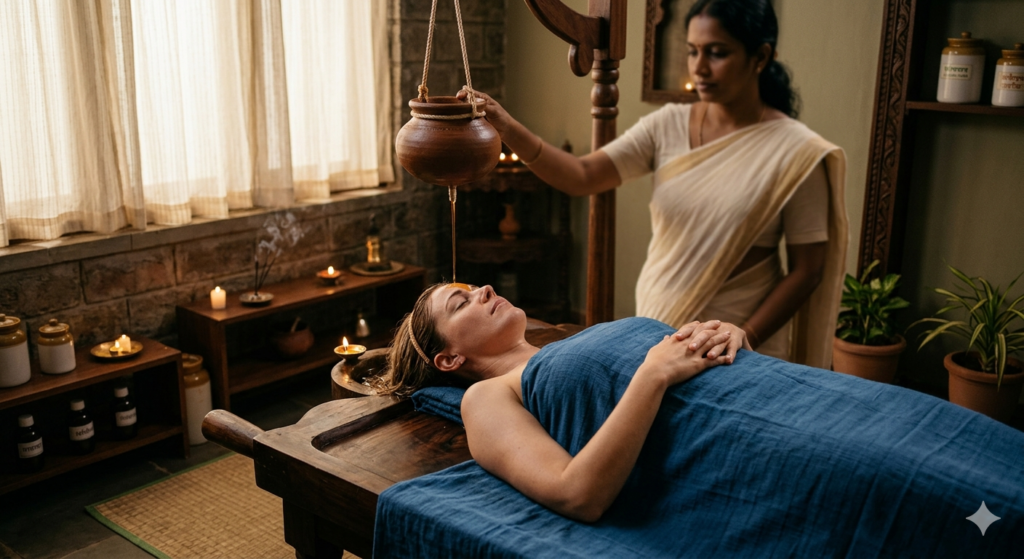
Shirodhara is a classical Ayurvedic therapy where a continuous stream of warm medicated oil, milk, or herbal decoction is poured onto the forehead (specifically the “third eye” region).
The term is derived from:
- Shiro = Head
- Dhara = Flow
This therapy is deeply calming and is widely used in Ayurveda to treat mental disorders, stress, anxiety, insomnia, and especially depression.
Understanding Depression
Definition of Depression
Depression is a mental health disorder characterized by persistent sadness, lack of interest, fatigue, and emotional imbalance. It affects how a person feels, thinks, and behaves.
Types of Depression
- Major Depressive Disorder (MDD)
- Persistent Depressive Disorder (Dysthymia)
- Seasonal Affective Disorder (SAD)
- Postpartum Depression
- Bipolar Depression
Each type varies in severity and duration but shares common emotional and physical symptoms.
Symptoms of Depression
- Continuous sadness or low mood
- Loss of interest in daily activities
- Sleep disturbances
- Fatigue and low energy
- Difficulty concentrating
- Feelings of worthlessness
- Suicidal thoughts (in severe cases)
Diagnosis of Depression
Diagnosis is usually done through:
- Clinical evaluation by a psychiatrist
- Psychological questionnaires (PHQ-9, DSM-5 criteria)
- Medical history assessment
- Sometimes blood tests to rule out underlying conditions
Pathogenesis of Depression
Modern View
Depression is linked to:
- Neurotransmitter imbalance (serotonin, dopamine)
- Hormonal changes
- Genetic predisposition
- Chronic stress
Ayurvedic Perspective
In Ayurveda, depression is associated with imbalance in:
- Vata Dosha (anxiety, fear)
- Kapha Dosha (lethargy, heaviness)
- Disturbance in Manovaha Srotas (mental channels)
It is often categorized under conditions like:
- Vishada
- Manasika Roga
What is Shirodhara for Depression?
Shirodhara for depression is an Ayurvedic therapy designed to calm the nervous system and restore mental balance. It works by stimulating the hypothalamus and regulating hormones responsible for mood.
The rhythmic flow of oil creates a meditative state, helping the mind relax deeply.
Types of Shirodhara Used for Depression
Different types of Shirodhara are used depending on the individual’s condition:
1. Taila Dhara (Oil Therapy)
- Uses medicated oils like Brahmi oil
- Best for Vata-related depression
2. Takra Dhara (Buttermilk Therapy)
- Cooling effect
- Suitable for stress and anxiety
3. Ksheera Dhara (Milk Therapy)
- Nourishing and calming
- Helps in emotional imbalance
4. Jala Dhara (Water Therapy)
- Less commonly used
- Provides mild relaxation
How Shirodhara Helps in Depression
- Calms the central nervous system
- Reduces cortisol (stress hormone)
- Improves sleep quality
- Enhances serotonin production
- Promotes mental clarity
The therapy induces a state similar to meditation, which is highly beneficial in managing depression.
Procedure of Shirodhara
- The patient lies comfortably on a therapy table
- Warm oil or liquid is poured continuously on the forehead
- The process lasts for 30–45 minutes
- Followed by gentle head massage
Sessions are usually done for 7–14 days depending on severity.
Ayurvedic Treatment for Depression
Apart from Shirodhara for depression, Ayurveda includes:
Herbal Medicines
- Brahmi
- Ashwagandha
- Jatamansi
- Shankhpushpi
Panchakarma Therapies
- Abhyanga (oil massage)
- Nasya (nasal therapy)
- Basti (medicated enema)
Lifestyle Changes
- Yoga and meditation
- Balanced diet
- Proper sleep routine
Modern Treatment for Depression
Modern medicine focuses on:
Medications
- Antidepressants (SSRIs, SNRIs)
- Mood stabilizers
Therapies
- Cognitive Behavioral Therapy (CBT)
- Psychotherapy
Other Approaches
- Lifestyle modification
- Exercise
- Stress management
Correlation Between Ayurvedic and Modern Treatment
Both systems aim to restore mental balance but use different approaches:
| Aspect | Ayurveda | Modern Medicine |
| Approach | Holistic | Symptom-based |
| Focus | Mind-body balance | Brain chemistry |
| Treatment | Natural therapies | Medications |
| Side Effects | Minimal | Possible |
Shirodhara for depression complements modern treatment by enhancing relaxation and reducing medication dependency in some cases.
Benefits of Shirodhara for Depression
- Deep mental relaxation
- Reduces anxiety and stress
- Improves sleep quality
- Enhances emotional stability
- Boosts overall well-being
Advantages of Shirodhara
- Natural and non-invasive
- Minimal side effects
- Improves mind-body connection
- Suitable for long-term use
Disadvantages of Shirodhara
- Requires multiple sessions
- Can be costly
- Not a standalone cure for severe depression
- Needs trained professionals
Who Should Avoid Shirodhara?
- People with scalp infections
- Severe neurological disorders
- Pregnant women (consult doctor)
- Individuals with allergies to oils
Precautions During Shirodhara
- Always consult an Ayurvedic doctor
- Use authentic herbal oils
- Ensure hygienic conditions
- Follow proper diet during therapy
Is Shirodhara effective for depression?
Yes, Shirodhara for depression is effective in reducing stress, anxiety, and improving mental health when combined with proper treatment.
How many sessions are required?
Usually 7–14 sessions are recommended depending on severity
Can Shirodhara replace antidepressants?
No, it should not replace medications without medical advice. It works best as a complementary therapy.
Is it safe?
Yes, when performed by trained professionals, it is safe and beneficial.
How quickly does it show results?
Many people feel relaxed after the first session, but long-term benefits require consistent therapy.


